Due to changing industrial needs and supply chain dynamics, Professional Flash Dryer prices have fluctuated significantly throughout 2024 in Europe, America, the Middle East, and Russia. According to recent market data, high-efficiency dryers fetch higher prices as thermal drying technology develops. By understanding these pricing trends, manufacturers and procurement specialists may enhance their moisture removal procedures and make wise investment choices. The worldwide industrial drying equipment industry faces unprecedented difficulties as firms seek dependable partners for continuous drying process solutions. While American manufacturers devote attention to powder drying capabilities, European markets show a high requirement for energy-saving dryer solutions. Russian companies emphasize precise temperature control, while Middle Eastern companies concentrate on efficient bulk material handling. These geographical preferences greatly influence pricing structures and procurement methods.
Current Market Pricing Analysis for Industrial Drying Equipment
Factory Price Ranges Across Key Markets
European markets indicate FOB pricing ranging from $45,000 to $180,000 for basic industrial manufacturing units, with premium versions topping $300,000. American purchasers often confront CIF prices between $52,000 and $220,000, reflecting greater shipping expenses and regulatory compliance requirements. While Russian procurement typically ranges from $42,000 to $195,000 CIF, the Middle East market offers reasonable prices from $38,000 to $165,000 FOB. These price discrepancies reflect various market maturity levels and technology needs. Advanced airflow drying systems command bigger premiums due to enhanced evaporation rate capabilities and process automation features. Manufacturers specializing in material processing equipment often provide customized solutions that justify premium pricing structures.
Minimum Order Quantities and Volume Discounts
Standard MOQ requirements often start at single units for specialized applications, while bulk buys of 3-5 units unlock significant savings. Volume discounts range from 8-15% for purchases over 10 units, with extra benefits for long-term cooperation arrangements. Many suppliers provide extended payment arrangements for big orders, understanding the capital-intensive nature of industrial production projects. Bulk purchase tactics prove particularly effective for organizations implementing significant drying capacity expansions. Granular material drying operations benefit from standardized equipment specifications, enabling economies of scale that lower per-unit costs dramatically.
Additional Cost Considerations
Import tariffs vary substantially among areas, with the European Union putting 6-12% charges on industrial equipment, while American tariffs range from 8-25% depending on origin classification. Middle Eastern countries often keep lower tariff systems at 5-10%, and Russian charges fluctuate between 10-20% based on the current trade policy. Logistics fees constitute 15-25% of overall landing costs, comprising shipping, insurance, and customs clearing procedures. Installation and commissioning services add around $8,000-$25,000 per unit, while training programs contribute another $3,000-$8,000 to overall project costs.
Market Forces Shaping Equipment Pricing
Raw Material Cost Impact
Heat transfer system production costs are strongly impacted by the volatility of steel prices, which have recently increased by 18–25% over the previous year. Specialized alloys necessary for drying chamber construction have suffered considerably higher inflation rates, reaching 30-35% in some categories. These material cost pressures inevitably transfer into higher equipment pricing across all market categories. Component sourcing issues have arisen as key factors, particularly for advanced temperature control systems and process automation modules required in Professional Flash Dryer manufacturing. Supply chain problems continue hurting delivery timelines and pricing consistency, pushing many firms to use dynamic pricing techniques.
Labor and Manufacturing Considerations
Skilled technician availability influences production costs greatly, with specialized welding and assembly expertise fetching premium salaries. European manufacturers confront particularly significant labor shortages, contributing to higher manufacturing costs and extended lead times. Technology investments assist American facilities by increasing productivity, which partially offsets labor cost increases. Quality control requirements for product quality enhancement systems necessitate significant testing and certification procedures. These validation techniques incur large expenditures but ensure reliable performance in challenging industrial contexts.
Currency Exchange Rate Effects
Euro strength versus major currencies has made European equipment more expensive for overseas purchasers, while dollar fluctuations cause uncertainty for American firms operating abroad. Middle Eastern customers benefit from oil revenue stability, but geopolitical reasons create occasional volatility. Because of the sanctions and currency restrictions that impact international transactions, the dynamics of the Russian market remain complicated.
Regional Market Comparison and Competitive Landscape
Price Competitiveness Analysis
Chinese manufacturers offer attractive value offers with pricing 25-40% below European equivalents while keeping comparable performance standards. Companies like Great Drying Engineering demonstrate how domestic experience paired with international quality standards offers competitive benefits. Their vast experience since 2002 in innovative energy raw materials and solid track record in lithium hexafluorophosphate equipment puts them favorably against worldwide competition. Vietnamese and Indian manufacturers give alternative sourcing choices, while technology gaps remain visible in improved drying time optimization and energy efficiency features. Established players maintain advantages through strong after-sales service and customized capabilities.
Technology and Innovation Premiums
Modern features for equipment such as the Professional Flash Dryer, including adaptive temperature regulation and intelligent moisture control, command high prices in the market. European manufacturers excel in environmental compliance technologies, whereas American corporations lead in process integration capabilities. Asian suppliers increasingly compete on innovation rather than price alone, investing considerably in research and development. Patent-protected technologies create pricing protection for inventive producers, particularly in specialized applications like pharmaceutical and precision chemical processing. These technical moats justify greater pricing while giving superior operational performance.
Strategic Procurement Optimization
Effective Negotiation Approaches
Successful negotiations begin with full technical specification comprehension and realistic timeframe expectations. Building long-term connections with trusted suppliers often offers better pricing than just transactional approaches. Volume commitments and flexible delivery timelines enhance bargaining power while decreasing supplier risks. Technical cooperation options provide win-win scenarios where suppliers engage in customization, knowing customers commit to continuous partnerships. This strategy proved particularly beneficial for specialized applications requiring unique engineering solutions.
OEM and Customization Strategies
Original Equipment Manufacturer relationships allow significant cost reductions through design optimization and standardization. Custom modifications frequently increase costs by 15-35%, although focused enhancements can improve operational efficiency sufficiently to justify investments. Modular design techniques provide staggered deployments that disperse capital requirements over time while keeping upgrade flexibility. This method notably advantages organizations with evolving production requirements or unpredictable future capacity needs.
Future Pricing Trends and Market Outlook
Economic Indicators and Projections
Inflation pressures imply ongoing price rises of 8-12% yearly until 2025; competition may reduce some increases. Energy prices greatly impact operating profitability, pushing demand for energy-saving dryer technology despite greater initial investments. Regulatory trends toward environmental compliance will certainly increase costs for established systems while generating opportunities for creative solutions. Carbon pricing systems emerging in various markets will promote energy-efficient technologies over conventional alternatives.
Technology Evolution Impact
Predictive maintenance capabilities and artificial intelligence integration are examples of new value propositions that support premium pricing. Industry 4.0 connection elements become common expectations rather than optional improvements, influencing baseline pricing structures. Sustainability needs to encourage the development of more efficient heat recovery systems and decreased environmental impact designs. These breakthroughs often command 20-30% premiums initially but attain cost parity as volumes increase and technology improves.
Conclusion
Professional Flash Dryer pricing reflects the complicated interplay between technology innovation, regional market dynamics, and economic forces. European markets emphasize quality and compliance, American buyers prioritize innovation and efficiency, Middle Eastern clients focus on reliability and service, while Russian markets balance performance with cost considerations. Understanding these geographical preferences enables strategic sourcing decisions that optimize both initial investment and long-term operational performance. Successful procurement entails combining present cost demands with future technology needs, prioritizing collaborations with proven manufacturers who exhibit consistent innovation and reliable support capabilities.
FAQ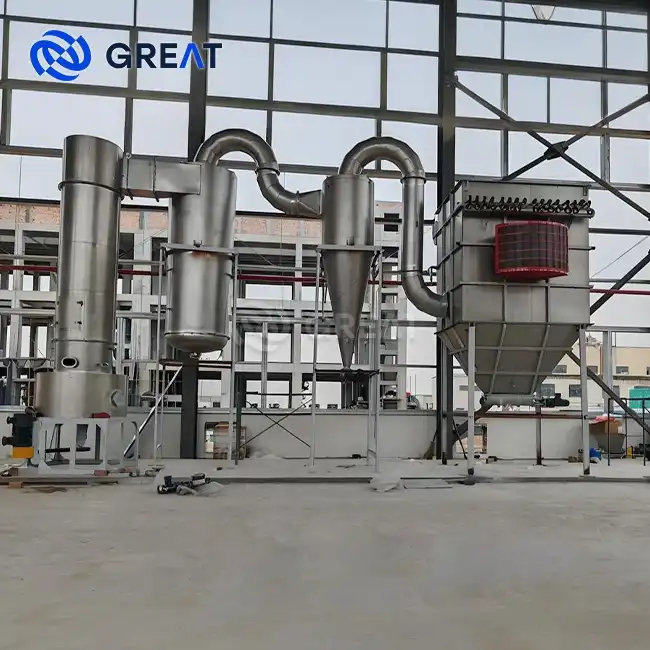
What factors most significantly influence Professional Flash Dryer pricing across different regions?
Regional pricing variations primarily result from import tariffs, logistics costs, local regulatory requirements, and currency exchange rates. European markets typically command premiums due to strict compliance standards, while competitive Asian manufacturing creates downward pressure on base pricing. Labor costs, raw material availability, and technology licensing fees also contribute substantially to regional price differences.
How do minimum order quantities affect overall equipment costs?
MOQ requirements significantly impact unit costs through volume discounts and shared logistics expenses. Single-unit purchases typically carry 15-25% premiums compared to bulk orders of 5+ units. Larger quantities enable customization, cost sharing, and reduced per-unit shipping expenses, though buyers must balance inventory carrying costs against procurement savings.
What additional costs should buyers budget beyond the quoted equipment price?
Comprehensive project budgets should include 25-40% above equipment costs for logistics, installation, training, and commissioning services. Import duties vary by region but typically add 5-25% to landed costs. Site preparation, utilities connections, and spare parts inventory represent additional investments that ensure smooth operational transitions and long-term reliability.
Get Premium Professional Flash Dryer Solutions from Great Drying Engineering
Changzhou Great Drying Engineering stands as China's benchmark enterprise for lithium hexafluorophosphate production equipment, delivering exceptional value through two decades of innovation and customer success. Our XSG series rotating flash dryers incorporate advanced bearing induction cooling technology and speed-regulating motors that provide ten times longer service life than conventional alternatives. With proven export success to Japan, the USA, and South Korea, we combine competitive pricing with international quality standards.
Our comprehensive capabilities extend beyond standard industrial drying equipment manufacturing to include complete production line customization and turnkey solutions. Government technology awards and an extensive patent portfolio demonstrate our commitment to innovation, while our customer-centric approach ensures your specific requirements translate into optimized results. Contact us at [email protected] to discuss how our expertise as a leading Professional Flash Dryer manufacturer can enhance your operations with cost-effective, reliable drying solutions tailored to your industry needs.
References
1. Industrial Drying Technology Market Analysis Report 2024, Global Manufacturing Intelligence Institute
2. "Thermal Processing Equipment Pricing Trends in Europe and North America," Journal of Industrial Engineering, Volume 45, Issue
3. Chemical Processing Equipment Trade Statistics 2024, International Trade Commission
4. "Energy Efficiency Standards Impact on Drying Equipment Costs," Proceedings of the International Drying Symposium 2024
5. Middle East and Russia Industrial Equipment Market Overview, Regional Industry Analysis Group
6. "Flash Drying Technology Innovations and Cost Implications," Chemical Engineering Progress Magazine, September 2024