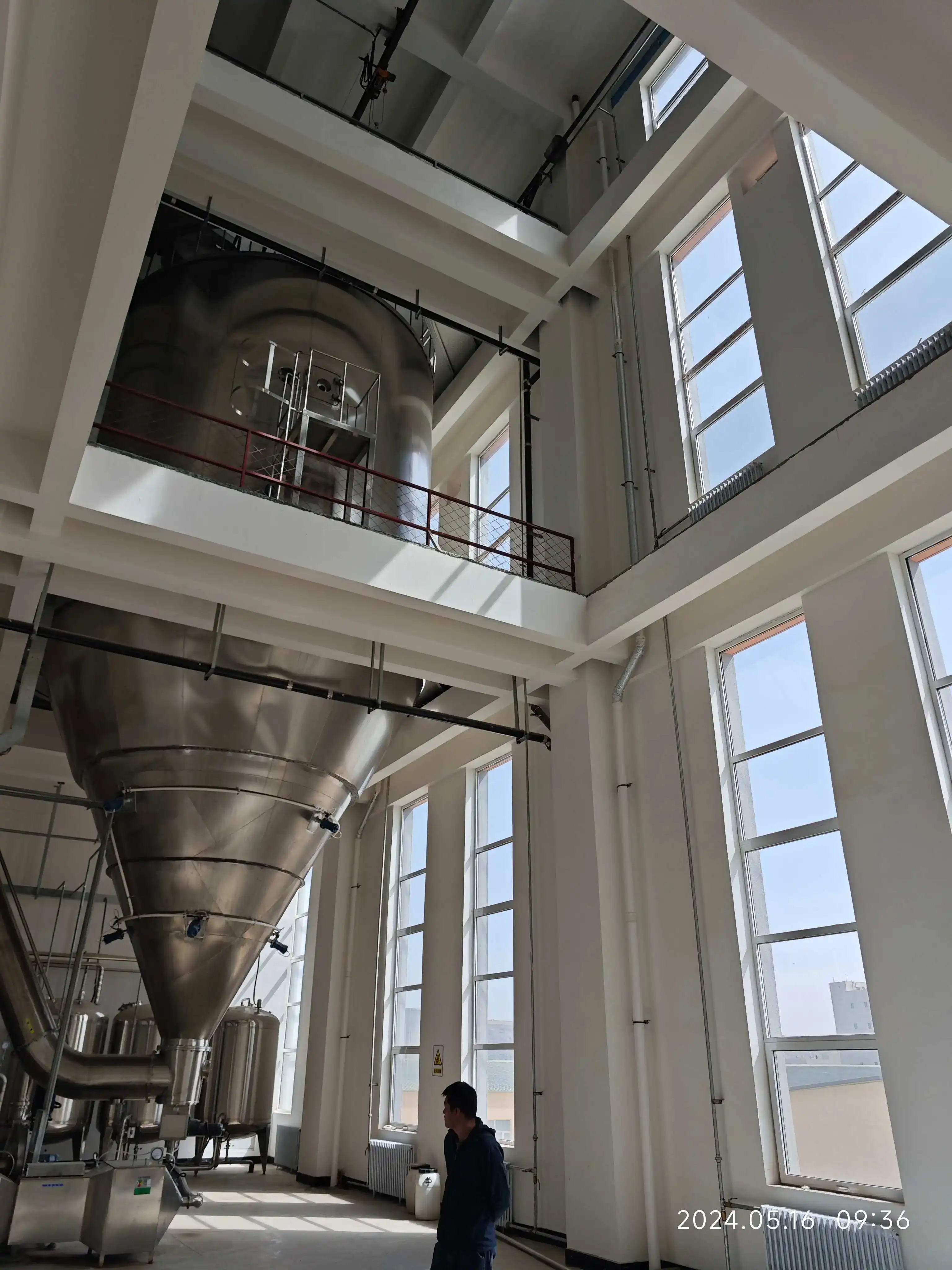
A Centrifugal Spray Dryer system comprises five essential components: the atomizer system for creating uniform droplets, the drying chamber for evaporation, the air heating system for temperature control, the product collection system for powder recovery, and the control system for process monitoring. These integrated components work together to transform liquid materials into high-quality powder products with precise particle size control and consistent moisture content. Understanding these core elements enables procurement professionals to make informed decisions when selecting spray drying equipment for pharmaceutical, chemical, and food processing applications.
Overview of Centrifugal Spray Dryer Systems
Spray drying innovation speaks to one of the most flexible powder generation strategies available nowadays. The handle starts when fluid bolster materials enter the framework through a carefully controlled conveyance component. A high-speed centrifugal atomizer at that point scatters this fluid into thousands of fine beads inside an uncommonly planned drying chamber.
The atomization handle happens at the same time as warmed discuss presentation, making ideal conditions for fast moisture evaporation. This controlled environment guarantees uniform molecule arrangement while keeping up item judgment. The whole operation ordinarily completes within seconds, making splash drying especially appropriate for heat-sensitive materials.
The centrifugal constraint created by pivoting plate atomizers makes reliable bead sizes extending from 10 to 500 microns. This consistency specifically interprets to unsurprising powder characteristics, counting molecule estimate dispersion, bulk thickness, and flowability. Businesses such as pharmaceuticals, fine chemicals, and food preparation depend on this exactness for assembly of rigid quality specifications.
Energy productivity remains a critical advantage of cutting-edge Centrifugal Spray Dryer frameworks. The LPG Arrangement Tall Speed Centrifugal Shower Dryer illustrates this proficiency through its optimized warm exchange plan, accomplishing gulf discuss temperatures between 140-350°C, while keeping up outlet temperatures of 80-90°C. This temperature differential maximizes dampness expulsion while minimizing vitality consumption.
Key Mechanical Components of a Centrifugal Spray Dryer
The mechanical foundation of any spray dryer system determines its reliability, performance, and maintenance requirements. Understanding these components helps procurement teams evaluate equipment specifications against operational demands.
Atomizer Systems and Design Considerations
The atomizer serves as the heart of the shower drying preparation, changing over fluid support into beads appropriate for drying. Centrifugal atomizers utilize high-speed turning circles, ordinarily working at speeds between 10,000 and 50,000 RPM. The plate plan, counting vane setup, and distance across specifically impact bead measure conveyance and drying characteristics. Material determination for atomizer components demonstrates basic for life span and item quality. Stainless steel 304 and 316L development gives erosion resistance, basic for pharmaceutical and chemical applications. The exact machining necessities for atomizer circles require specialized manufacturing capabilities, highlighting the significance of selecting experienced providers with demonstrated specialized expertise.
Drying Chamber Engineering
The drying chamber plan altogether impacts warm exchange effectiveness and item recuperation rates. Chamber geometry influences wind stream designs, home time, and temperature dissemination throughout the drying zone. Cone-shaped foot plans encourage total powder release, while minimizing item buildup that may compromise bunch purity. Modern drying chambers join advanced separator frameworks to keep up warm effectiveness whereas diminishing outside surface temperatures. This plan thought gets to be especially critical when handling temperature-sensitive materials or working in situations with strict security requirements.
Air Filtration and Heating Systems
Multi-stage discuss filtration guarantees contamination-free preparing situations, basic for pharmaceutical and food review applications. Pre-filters expel bigger particles, whereas high-efficiency channels dispense with infinitesimal contaminants that seem to influence item quality. The filtration framework also ensures downstream hardware from untimely wear and keeps up reliable discussion quality throughout the drying process. Heating framework adaptability permits adjustment to different office requirements and energy sources. Electric, steam, and gas-fired warming choices give acquisition groups with choices based on accessible utilities and operational inclinations. Progressive warming frameworks incorporate exact temperature control capabilities fundamental for keeping up item quality and optimizing energy consumption.
Key Process Control Components
Process control systems distinguish professional-grade Centrifugal Spray Dryers from basic equipment, enabling consistent product quality and operational efficiency. These components provide the monitoring and adjustment capabilities necessary for maintaining optimal drying conditions across varying production requirements.
Temperature and Airflow Management
Temperature control frameworks maintain exact warm conditions throughout the drying process. Progressed controllers screen different temperature focuses, including gulf discuss, outlet discuss, and item temperatures. This comprehensive observing avoids overheating of delicate materials while guaranteeing satisfactory moisture removal. Airflow controllers control the volume and speed of drying, straightforwardly influencing molecule residence time and heat transfer rates. Variable recurrence drives empower exact wind current alterations, permitting administrators to optimize drying conditions for distinctive materials without framework modifications.
Feed System Controls
Liquid conveyance frameworks require exact stream control to keep up reliable atomization and item quality. Our LPG Arrangement consolidates attractive filtration inside the capacity tank framework, avoiding defilement whereas guaranteeing smooth fluid flow. The bolster pump and stream meter combination gives exact stream rate control, fundamental for accomplishing target molecule characteristics. Automated weight transmitters keep up steady positive weight inside the framework, avoiding defilement whereas guaranteeing steady drying conditions. This positive weight control becomes especially critical when handling materials delicate to barometric humidity or contamination.
Maintenance and Troubleshooting Components
Effective maintenance programs extend equipment life while minimizing production disruptions. Understanding maintenance requirements helps procurement teams evaluate the total cost of ownership and supplier support capabilities.
Critical Wear Components
Atomizer plates speak to the essential wear component in Centrifugal Spray Dryers, requiring normal review and replacement. Wear designs ordinarily create slowly, influencing bead estimate dispersion and generally drying effectiveness. Setting up substitution plans based on working hours and fabric characteristics avoids startling execution degradation. Filter components require occasional substitution to keep up with quality and framework productivity. The recurrence depends on the fabric characteristics and natural conditions. High-quality channel media expands benefit intervals while keeping up filtration effectiveness.
Preventive Maintenance Protocols
Systematic review methods recognize potential issues some time recently they affect the generation. Key assessment focuses incorporate bearing condition, seal astuteness, and thermal cover adequacy. Custom support plans created in the organization with experienced providers guarantee ideal gear execution while minimizing unforeseen downtime. Great's comprehensive upkeep bolster incorporates nitty gritty documentation bundles, precision-machined replacement parts, and specialized help. Our quality control conventions guarantee that each component meets unique gear details, keeping up framework unwavering quality and execution standards.
How to Choose the Right Centrifugal Spray Dryer Components for Your Business?
Selecting appropriate spray dryer components requires careful evaluation of material properties, production requirements, and facility constraints. This assessment process determines system specifications that align with operational goals while providing flexibility for future needs.
Material Compatibility Assessment
Feed material characteristics significantly influence component selection and system configuration. Heat-sensitive materials may require lower inlet temperatures and modified airflow patterns, while abrasive materials necessitate enhanced wear-resistant components. Understanding these requirements helps specify appropriate materials of construction and component designs. Our experience with diverse applications, from lithium hexafluorophosphate production to refined amino acid processing, provides valuable insights for component selection. This expertise enables customized solutions that address specific production challenges while maintaining product quality standards.
Capacity and Scalability Considerations
Production capacity requirements determine atomizer size, drying chamber dimensions, and supporting system specifications. The LPG Series offers evaporation capacities from 5 to 2000 kg/h of water, providing scalability options for growing operations. This range accommodates both pilot-scale development and full production requirements. Modular design approaches enable future capacity expansion without complete system replacement. This flexibility proves particularly valuable for companies experiencing growth or developing new product lines with different processing requirements.
Great's Comprehensive Solution for Spray Drying Excellence
Great Drying Engineering brings decades of specialized experience to Centrifugal Spray Dryer system design and manufacturing. Since 2002, we have pioneered equipment development for new energy raw materials, establishing ourselves as the benchmark enterprise for lithium hexafluorophosphate production equipment. Our technical team combines solid professional knowledge with practical operation experience, supported by multiple patent certifications.
Our LPG Series High Speed Centrifugal Spray Dryer exemplifies our commitment to quality and innovation. Available in capacities ranging from 25 kg/h to 250 kg/h and beyond, these systems serve diverse industries including fine chemicals, pharmaceuticals, and food processing. Each unit undergoes rigorous testing to ensure optimal performance and reliability.
The comprehensive explosion-proof safety design prioritizes operator protection while processing hazardous materials. Our integrated solvent recovery system reduces operational costs through efficient organic solvent recycling. These advanced features demonstrate our understanding of modern industrial requirements and regulatory compliance needs.
Conclusion
Understanding the key components of a Centrifugal Spray Dryer system empowers procurement professionals and engineers to make informed equipment decisions. The atomizer, drying chamber, heating system, control components, and maintenance elements work together to deliver consistent powder production results. Great's LPG Series exemplifies how proper component integration achieves superior performance while maintaining operational efficiency. Our proven track record in fine chemicals, pharmaceuticals, and new energy applications demonstrates the reliability and versatility of well-engineered spray drying systems.
FAQ
Q: What determines the particle size distribution in centrifugal spray drying?
A: Particle size distribution depends on atomizer disc speed, feed flow rate, liquid properties (viscosity and surface tension), and drying air conditions. Higher disc speeds typically produce finer particles, while viscous feeds may require modified atomizer designs for optimal results.
Q: How do I calculate the appropriate drying capacity for my application?
A: Drying capacity calculations consider feed solids content, desired final moisture level, and production volume requirements. The LPG Series specifications provide evaporation rates from 5-2000 kg/h water, allowing selection based on actual moisture removal needs rather than feed volume alone.
Q: What maintenance schedule should I follow for optimal performance?
A: Maintenance frequency depends on operating conditions and material characteristics. Generally, atomizer discs require inspection every 500-1000 operating hours, filters need replacement based on pressure differential monitoring, and bearing lubrication follows manufacturer specifications. Great provides detailed maintenance protocols customized for specific applications.
Partner with Great for Superior Spray Drying Solutions
Elevate your powder production capabilities with Great's advanced centrifugal spray dryer technology. As a leading Centrifugal Spray Dryer manufacturer, we deliver customized solutions backed by over two decades of industry expertise. Our comprehensive approach includes equipment design, manufacturing, installation, and ongoing technical support to ensure your success.
Experience the Great difference through our commitment to quality, innovation, and customer satisfaction. Our technical team stands ready to collaborate on equipment development and process optimization, transforming your production challenges into measurable results. Connect with our experts to explore how our LPG Series can enhance your manufacturing capabilities and product quality. Contact us at [email protected] to discuss your specific requirements and discover the advantages of partnering with an industry benchmark leader.
References
1. Masters, K. (2002). Spray Drying Handbook. 5th Edition. Longman Scientific & Technical.
2. Patel, B.B., Patel, J.K., Chakraborty, S., and Shukla, D. (2015). Revealing facts behind spray-dried solid dispersion technology used for solubility enhancement. Saudi Pharmaceutical Journal, 23(4), 352-365.
3. Sosnik, A., and Seremeta, K.P. (2015). Advantages and challenges of the spray-drying technology for the production of pure drug particles and drug-loaded polymeric carriers. Advances in Colloid and Interface Science, 223, 40-54.
4. Huang, L.X., Kumar, K., and Mujumdar, A.S. (2003). A parametric study of the gas flow patterns and drying performance of co-current spray dryer: Results of a computational fluid dynamics study. Drying Technology, 21(6), 957-978.
5. Chegini, G.R., and Ghobadian, B. (2007). Spray dryer parameters for fruit juice drying. World Journal of Agricultural Sciences, 3(2), 230-236.
6. Nandiyanto, A.B.D., and Okuyama, K. (2011). Progress in developing spray-drying methods for the production of controlled morphology particles: From the nanometer to submicrometer size ranges. Advanced Powder Technology, 22(1), 1-19.