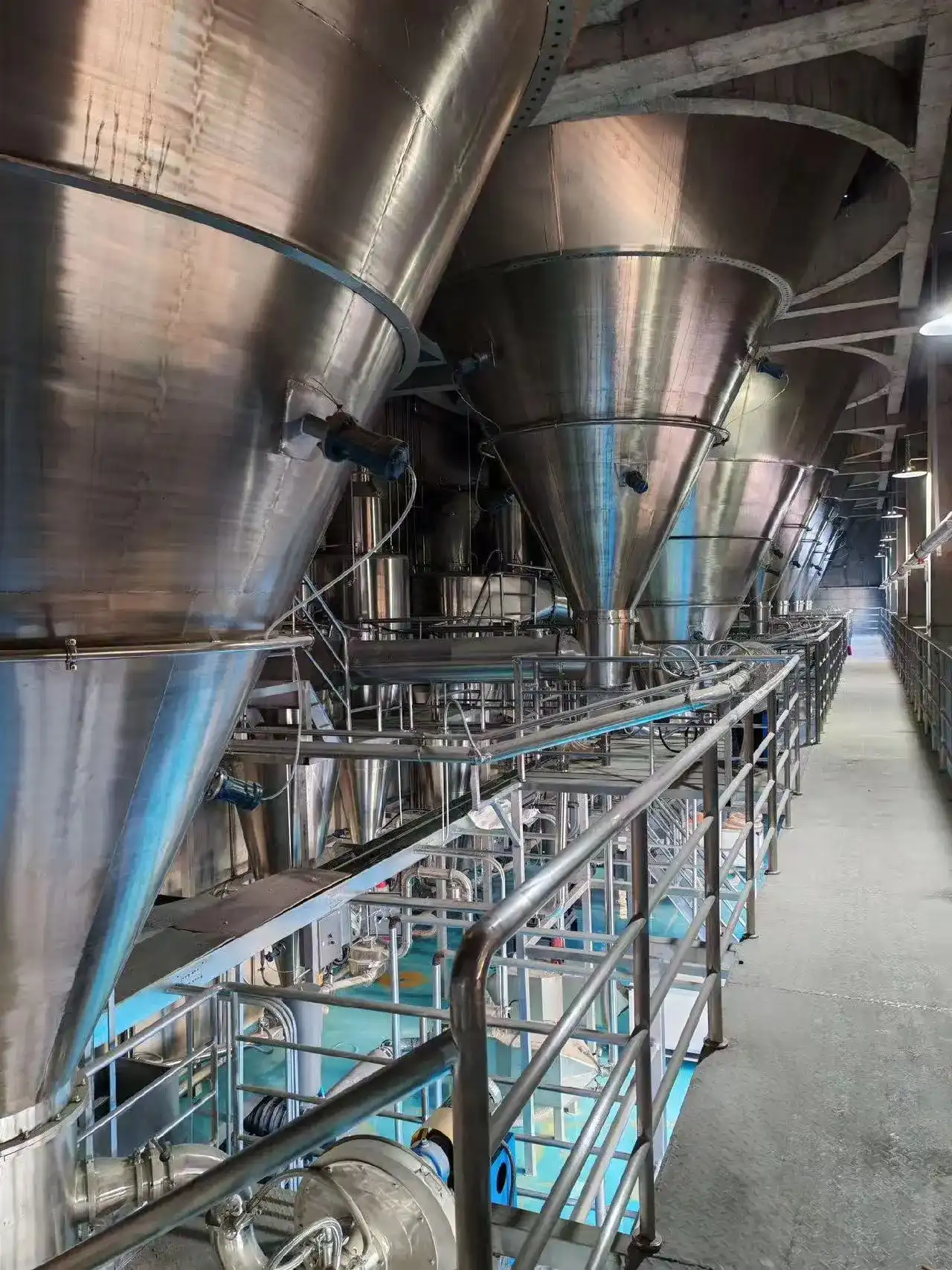

A Centrifugal Spray Dryer revolutionizes industrial drying by delivering exceptional product uniformity through advanced atomization technology. This sophisticated equipment transforms liquid feedstock into precisely controlled powder particles, ensuring consistent particle size distribution, moisture content, and morphology across every production batch. The high-speed centrifugal atomization system creates uniform fine droplets that dry rapidly and evenly, eliminating the variability challenges associated with traditional spray drying methods. Product uniformity represents a critical quality parameter in industrial manufacturing processes, directly impacting downstream processing efficiency, product performance, and end-user satisfaction. When manufacturers achieve consistent particle characteristics, they reduce waste, improve formulation stability, and enhance overall production reliability. This uniformity becomes particularly vital in high-value applications such as pharmaceutical active ingredients, fine chemicals, and specialized food products, where even minor variations can compromise product efficacy.
Understanding Product Uniformity Challenges in Spray Drying
Key Parameters Affecting Product Uniformity
Product consistency in splash drying envelops different basic parameters that decide the final powder quality and execution characteristics. Molecular measure conveyance stands as the essential consistency pointer, influencing flowability, disintegration behavior, and packaging thickness. Dampness substance varieties can lead to stability issues, shelf-life concerns, and preparation challenges amid downstream operations. Molecule morphology impacts surface zone, disintegration rates, and dealing with properties, whereas surface characteristics affect coating productivity and chemical reactivity. Understanding these parameters empowers producers to distinguish potential quality issues some time recently they affect generation proficiency. Deviations in any parameter can cascade through the fabrication process, influencing definition consistency and end-product execution over pharmaceutical, food, and chemical industries.
Common Challenges and Their Impact
Traditional splash drying strategies frequently battle with conflicting atomization designs, making molecule size variations that compromise item quality. Uneven warm profiles inside drying chambers can lead to over-drying or under-drying of particles, resulting in moisture content variations. Hardware restrictions, such as lacking temperature control or inadequate home time dispersion, contribute to variable molecule properties and debased item quality. These challenges ended up especially tricky for worldwide B2B clients who require steady quality benchmarks over different generation clusters. Changeability increments squander time, complicate quality control methods, and can lead to client complaints or administrative compliance issues. Tending to these principal challenges through progressive centrifugal splash drying innovation gives producers solid arrangements for accomplishing predominant item uniformity.
The Principle and Design Features of Centrifugal Spray Dryers That Enhance Uniformity
Centrifugal Atomization Technology
Centrifugal splash dryers utilize high-speed pivoting disks to atomize fluid nourish into uniform fine beads, advancing fast and steady drying inside absolutely controlled chamber situations. This atomization strategy produces more unsurprising bead measure disseminations compared to routine weight spout frameworks, which frequently endure from clogging issues and unpredictable shower designs. The centrifugal constraint makes a steady breakup instrument that produces beads with a contract estimate dispersion range. The LPG Arrangement Tall Speed Centrifugal Shower Dryer embodies this innovation with vanishing capacities extending from 5-2000 kg/h water, channel discuss temperatures of 140-350°C, and outlet temperatures of 80-90°C. The most extreme molecule measure accomplishes 60 work accuracy, developed from high-grade stainless steel 304/316L materials for solidity and defilement prevention.
Advanced Design Features for Enhanced Control
Modern Centrifugal Spray Dryer joins advanced plan components that work synergistically to create homogeneous powders with controlled molecule morphology. Here are the center plan points of interest that upgrade item uniformity:
- Adjustable Atomizer Speeds: Variable turn speeds empower exact bead measure control, permitting administrators to fine-tune molecule characteristics based on particular fabric necessities and end-use applications.
- Optimized Wind current Dispersion: Progressed discuss dissemination frameworks guarantee uniform warm and mass exchange throughout the drying chamber, disposing of hot spots and temperature variations that can compromise molecule quality.
- Integrated Temperature Control: Modern warming frameworks, including electric, steam, and gas choices, give exact temperature control adjusted to particular office necessities and fabric sensitivities.
- Efficient Cyclonic Division: High-performance partition frameworks guarantee total powder recuperation while keeping up molecule astuteness and avoiding agglomeration amid collection processes.
These progressed highlights empower OEMs and B2B clients to tailor gear arrangements for prevalent consistency at scale, tending to particular generation prerequisites whereas keeping up reliable quality guidelines over different applications.
How Centrifugal Spray Drying Process Parameters Influence Product Uniformity?
Critical Process Variables and Their Control
Product consistency depends intensely on carefully controlled preparation parameters that must be optimized for each particular application. Atomization speed straightforwardly impacts bead estimate dispersion, with higher speeds generally creating better particles and more uniform measure ranges. Nourish thickness influences the atomization process, requiring alterations to accomplish ideal bead arrangement and avoid sporadic molecule characteristics. Drying conditions counting temperature profiles, wind stream designs, and home time conveyance, must be adjusted to accomplish effective dampness evacuation whereas protecting fabric properties. The channel discusses a temperature range of 140-350°C, which permits adaptability for heat-sensitive materials, whereas the controlled outlet temperature of 80-90°C guarantees steady last moisture content without warm degradation.
Real-Time Monitoring and Quality Assurance
Maintaining steady operations requires ceaseless observing frameworks that track basic control factors and empower quick reaction to deviations. Progressed control frameworks with temperature checking capabilities give administrators with real-time criticism on handling conditions, permitting quick alterations to keep up item quality. Mechanized weight transmitters keep up steady positive weight conditions, avoiding defilement whereas guaranteeing steady drying environments. Troubleshooting common issues such as molecule agglomeration or drying irregularities becomes more sensible with coordinate checking frameworks that recognize issues before they affect last item quality. This proactive approach guides the obtainment and building experts in accomplishing reproducible, high-quality items while minimizing operational costs.
Real-World Applications and Case Studies Demonstrating Improved Uniformity
Industry-Specific Applications and Benefits
Centrifugal shower drying innovation conveys quantifiable benefits over assorted mechanical applications by creating powders with exact determinations and steady quality characteristics. In pharmaceutical fabricating, uniform molecule dispersion guarantees exact dosing and dependable bioavailability, basic components for effective viability and regulatory compliance. Nourishment industry applications benefit from protected flavor profiles and surface consistency, empowering producers to keep up item quality over expanded rack lives. Chemical and materials preparation operations use uniform particles to make strides in downstream handling proficiency and improve product performance. The micro-powder granulation capabilities empower the preparation of nano-scale materials counting silicon dioxide, zirconium oxide, aluminum oxide, and zinc oxide, into micron-scale circular particles with reliable properties.
Demonstrated Performance Improvements
Leading producers in biotechnology, fine chemicals, and unused vitality divisions have effectively implemented centrifugal shower drying innovation to accomplish predominant item consistency. These applications incorporate protein drying with protected action levels, probiotic powder fabrication with upgraded stability, and lithium hexafluorophosphate generation with exact molecular characteristics for battery applications. The technology's flexibility expands to catalyst arrangement, ceramic powder generation, and polymer drying applications, where steady molecule morphology straightforwardly impacts last item execution. These real-world uses illustrate the technology's capability to keep up with item judgment while lessening operational downtime and accomplishing competitive showcase positioning.
Selecting and Maintaining the Right Centrifugal Spray Dryer for Uniform Product Output
Equipment Selection Criteria
Choosing optimal Centrifugal Spray Dryer equipment requires a comprehensive assessment of production capacity requirements, target particle size specifications, and material compatibility considerations. The range of available capacities from 25 kg/h to 250 kg/h enables scalability from pilot testing to full production volumes, accommodating diverse manufacturing requirements and growth projections. Material compatibility becomes crucial when processing corrosive or reactive substances, making stainless steel 304/316L construction essential for maintaining product purity and equipment longevity. Customizable OEM options allow tailoring equipment configurations to specific application requirements, including explosion-proof safety designs for hazardous material processing and integrated solvent recovery systems for cost reduction.
Maintenance Practices for Sustained Performance
Maintaining consistent equipment performance requires systematic maintenance practices that preserve uniformity capabilities throughout the equipment lifecycle. Essential maintenance procedures include regular cleaning protocols to prevent cross-contamination, systematic inspection of atomization systems to ensure consistent droplet formation, and component replacement schedules that prevent performance degradation. The accessible component design and simplified cleaning procedures minimize maintenance downtime while ensuring optimal performance standards. Regular performance testing validates continued uniformity capabilities, enabling procurement and engineering teams to maximize return on investment while reducing production risks and maintaining quality consistency throughout extended operational periods.
Advanced Centrifugal Spray Drying Solutions from Great
Changzhou Great Drying Engineering Co., Ltd. specializes in manufacturing state-of-the-art centrifugal spray drying solutions tailored for pharmaceutical, fine chemicals, new energy materials, and food processing industries worldwide. Our advanced LPG Series High Speed Centrifugal Spray Dryers feature precision atomization systems, energy-efficient drying chambers, and customizable configurations designed to ensure consistent product uniformity across diverse applications.
Since 2002, Great has pioneered new energy raw material equipment development, earning recognition as the benchmark enterprise in China for lithium hexafluorophosphate production equipment. Our technical expertise extends to fine fluorine chemistry applications, refined amino acid processing, and pharmaceutical chemical manufacturing, supported by multiple patent certificates and government technology progress awards.
The comprehensive product range includes explosion-proof safety designs, integrated solvent recovery systems, and flexible heating configurations adapted to specific site conditions and processing requirements. Quality assurance protocols encompass material inspection procedures, precision machining standards, assembly checkpoints, and pre-delivery performance testing to ensure optimal reliability and performance.
Conclusion
Centrifugal spray dryers significantly improve product uniformity through advanced atomization technology, precise process control, and sophisticated design features that address traditional spray drying challenges. The consistent droplet formation, controlled thermal profiles, and optimized separation systems work together to produce powders with predictable particle characteristics, enabling manufacturers to achieve superior product quality and operational efficiency. Understanding these technological advantages empowers procurement professionals to make informed decisions that enhance manufacturing capabilities while reducing costs and improving competitive positioning in demanding global markets.
FAQ
Q: How does centrifugal atomization differ from pressure nozzle atomization in spray dryers?
A: Centrifugal atomization uses high-speed rotating disks to create uniform fine droplets through centrifugal force, offering superior control over particle size distribution compared to pressure nozzles. This method eliminates clogging issues common with nozzle systems and provides more consistent atomization patterns, resulting in improved product uniformity and reduced maintenance requirements.
Q: What are the energy efficiency benefits of centrifugal spray dryers compared to other drying methods?
A: Centrifugal spray dryers consume less energy through precise atomization that creates optimal droplet sizes for rapid drying, reducing residence time requirements. The efficient heat transfer and improved material yield lower operational costs, while the integrated solvent recovery systems can reclaim valuable organic solvents, further reducing production expenses.
Q: Can centrifugal spray dryers handle heat-sensitive or sticky materials while maintaining uniformity?
A: Yes, centrifugal spray dryers excel at processing sensitive materials through adjustable inlet temperatures (140-350°C), controlled outlet conditions (80-90°C), and variable atomization speeds. The precise temperature control and short residence times prevent thermal degradation while maintaining excellent particle uniformity, making them ideal for pharmaceutical actives, probiotics, and enzyme preparations.
Partner with Great for Superior Spray Drying Solutions
Transform your production capabilities with Great's advanced centrifugal spray drying technology that delivers exceptional product uniformity and operational excellence. Our proven expertise in fine chemicals, pharmaceutical processing, and new energy applications ensures reliable solutions tailored to your specific requirements. As a leading centrifugal spray dryer manufacturer with over two decades of industry experience, Great provides comprehensive support from equipment design through ongoing maintenance.
Discover how our LPG Series High Speed Centrifugal Spray Dryers can enhance your product quality and processing efficiency. Contact our technical specialists to discuss your application requirements and explore customization options that address your unique production challenges. Reach out to Great today and experience the difference that precision engineering makes - contact us at [email protected].
References
1. Masters, K. "Spray Drying Handbook: Fourth Edition." John Wiley & Sons, 1991.
2. Zbicinski, I., Strumillo, C., Delag, A. "Drying Kinetics and Particle Formation During Spray Drying." Advanced Powder Technology, Vol. 15, No. 6, 2004.
3. Patel, R.P., Patel, M.P., Suthar, A.M. "Spray Drying Technology: An Overview." Indian Journal of Science and Technology, Vol. 2, No. 10, 2009.
4. Anandharamakrishnan, C., Ishwarya, S.P. "Spray Drying Techniques for Food Ingredient Encapsulation." CRC Press, 2015.
5. Filková, I., Huang, L.X., Mujumdar, A.S. "Industrial Spray Drying Systems: Handbook of Industrial Drying." Marcel Dekker Inc., 2006.
6. Sosnik, A., Seremeta, K.P. "Advantages and Challenges of the Spray-Drying Technology for the Production of Pure Drug Particles and Drug-Loaded Polymeric Carriers." Advances in Colloid and Interface Science, Vol. 223, 2015.